


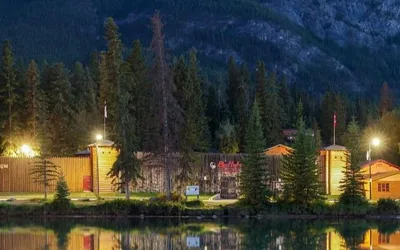
In the shadow of the Rockies, where the Bow River runs clear beside the old fort grounds at Sundance Park, a full day of Indigenous culture, drumming, storytelling, and connection unfolds on September 19, 2026. The Buffalo Nations Cultural Day, free and open to all, transforms the grounds of Banff's Buffalo Nations Museum at 1 Birch Avenue into a living classroom and gathering place, welcoming visitors from ten in the morning until five in the evening.
The day's programming reads like a sampler of living Indigenous tradition: guided museum tours led by Indigenous interpreters, cultural presentations, storytelling sessions, drumming and dance performances, traditional demonstrations, artisan vendors selling handcrafted work, and even the raising of a tipi across the museum's historic grounds. Elders and Knowledge Keepers will be present throughout the day, alongside artists, artisans, youth leaders, and community members from the Treaty 7 Nations. Children will find family-friendly experiences woven through the schedule. The day concludes with something quieter and more contemplative — an Indigenous interpretation of the night sky, offered as the September sun dips behind the mountains.
But the event is more than a cultural festival on a beautiful stretch of riverfront. It is the public face of a vision that has been quietly taking shape for more than seventy years, long before the museum that now anchors it existed.
That vision belongs, in large part, to Chief Walking Buffalo — a Stoney Nakoda medicine man who stood at Blackfoot Crossing with his family when Treaty 7 was signed in 1877. Walking Buffalo's life spanned one of the most turbulent and transformative periods in Indigenous history on the Plains. He witnessed the catastrophic decline of the buffalo herds that had sustained his people for millennia. He lived through the signing of the treaty that would reshape the relationship between First Nations and the Crown. And in his later years, he undertook something remarkable.
Chief Walking Buffalo traveled the world on a Moral Re-armament journey for peace and unity, accompanied by a small entourage of Stoney and Tsuut'ina leaders and community members: Chief David Crowchild, Daisy Crowchild, Edwin Crane, Joseph Kootenay, Jimmy Kaquitts, and Henry Holloway. The group's mission was to promote understanding and walk together with peoples of other nations in peace. Out of that vision of cultural exchange and mutual respect grew the idea for what would eventually become the Buffalo Nations Cultural Society — an organization formed informally during the 1960s and 1970s with the objective of establishing a cultural park and educational facility near the mountains, a place where First Nations cultures could be understood both within their own communities and by the visitors who come to the Rockies from around the world.
The society was formally incorporated as a not-for-profit organization in 1989. Its membership draws from Treaty 6 and Treaty 7 nations and the Métis, including the Blackfoot Confederacy — Siksika, Piikani, and Kainai — along with Tsuut'ina, Stoney Nakoda, and Cree peoples. The Buffalo Nations Museum is a standalone division of the society, owned and operated by the Buffalo Nations Cultural Society and run by the Board of Directors of the Luxton Museum Society, operating as Buffalo Nations Museum.
That the museum's governance still bears the Luxton name points to an older chapter in the building's story. The museum occupies a historic structure on the banks of the Bow River, a fort-like building long associated with Banff's early tourism history. Norman Luxton, a Banff pioneer and entrepreneur, was a key figure in early attempts to interpret and present Indigenous life for visitors to the Canadian Rockies. His museum collection formed the basis of what would become the Buffalo Nations Museum's holdings — a collection that includes richly ornamented regalia, beautifully decorated tipis, exquisite quillwork, and unique hunting equipment.
The museum's own materials describe its purpose with striking clarity: to show how the people of this land lived and adapted to their surroundings, and to celebrate the richness, diversity, continuity, and above all the resilience of the native peoples of this area. Walking through the collection, visitors encounter the material culture of the Plains peoples whose territories encompass the region — the elaborate ceremonial regalia worn at gatherings and dances, the quillwork created with materials harvested from the land, the tipis designed to be dismantled and moved as the great herds moved.
On September 19, those objects will come into living context. The tipi raising scheduled for the day is not simply a demonstration for tourists — it is an act of cultural transmission, a skill and practice passed through generations, now offered for visitors to witness. The drumming and dance performances connect directly to the ceremonial traditions the museum's collection preserves in material form. The stories told by Elders and Knowledge Keepers on the museum grounds are the same stories that animate the objects on display inside.
The decision to make the event entirely free — complimentary admission to the event, the museum, and all guided tours, no tickets required — reflects the mission that has guided the Buffalo Nations Cultural Society since its founding. The museum was never intended to be a static repository of artifacts behind glass. It was intended to be a bridge: between Indigenous and non-Indigenous peoples, between Treaty 7 communities and the millions of international visitors who pass through Banff each year, between the past and a living present.
The setting itself is layered with meaning. The museum's grounds sit along the Bow River, a waterway that was a transportation corridor and meeting place for Indigenous peoples long before Banff existed as a tourist town, long before the railway arrived, long before the national park was established. Sundance Park's very name points to ceremonial traditions that have taken place in this region for countless generations. The fort-like building suggests the meeting of cultures that has defined this place for over a century — first as a trading and interpretive post, now as a museum operated by and for Indigenous peoples.
The event's organizers urge visitors to dress for variable weather, noting that outdoor programming may be adjusted or postponed. But whatever the September skies bring, the gathering is designed to be free-flowing — visitors come and go as they please, explore at their own pace, and encounter what draws them. Some will come for the artisan market. Others will arrive for the drumming. Still others will wander in off the Banff trails and find themselves standing before a tipi, watching it rise against a backdrop of mountain peaks, participating without even planning to.
And when evening comes, the day ends with the night sky. An Indigenous interpretation of the stars, constellations, and celestial stories — knowledge systems that, like the buffalo themselves, have persisted through everything. It is a fitting conclusion to a day built on the conviction of people like Chief Walking Buffalo: that understanding between peoples is possible, that culture is not a relic to be preserved in glass cases but a living thing to be shared, and that there is a place in the heart of a mountain town for the voices and traditions of the people who were here first.
The buffalo are gone from Banff's riverbanks, though efforts continue to restore wild bison to the national park. But the people who followed those herds are still here, and on September 19, they will open their doors and lower the barriers — free, welcoming, and unhurried, along the banks of the Bow.