


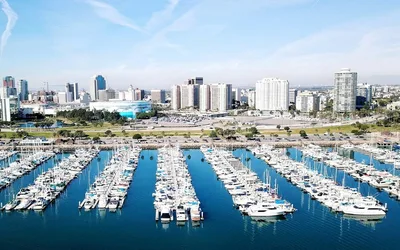
On most summer Saturdays, getting a seat on a Port of Long Beach harbor tour feels like winning a small lottery. Because, quite literally, it is. The port's wildly popular seasonal tours—which have run every summer since 2008—operate on a strict online registration system, and demand so far outstrips supply that the port resorts to a random drawing and a waiting list. Would-be passengers enter, hope, and most often hear back that their names didn't come up.
But on Saturday, September 19, from 2 to 4 p.m., the port is tossing that system aside. Three narrated 90-minute excursions will depart from Dock 4 near the Aquarium of the Pacific on a first-come, first-served basis. No reservation. No lottery. No fee. Just show up, board, and sail.
It's the kind of public-access opportunity that residents of Long Beach and surrounding communities rarely get. The Port of Long Beach—together with its neighbor, the Port of Los Angeles—forms the San Pedro Bay port complex, the largest maritime gateway in the Western Hemisphere and the entry point for roughly 40 percent of all containerized U.S. imports and exports. The ships that glide through these waters are among the largest cargo vessels on the planet, and from the deck of a harbor tour boat, they loom like floating city blocks, their hulls rising stories above the waterline. Passengers will get close enough for photos of the hulking vessels, the towering gantry cranes that line the wharves, and the seals, sea lions, and occasional dolphins that share the harbor.
That this experience is free—and, on this particular day, reservation-free—is the kind of generosity that the port can afford, but rarely offers so casually. The economic scale behind those docked ships is staggering. The Port of Long Beach alone contributes $141.2 billion in value to California's economy, adds $309 billion to U.S. gross domestic product, and supports $176 billion in annual trade-related wages nationwide, according to the port's own figures. The harbor tours, by contrast, are a public relations gesture in the best sense: a chance for the people of the region to see, up close, the industrial marvel that quietly underpins so much of their daily lives.
The free walk-up tours mark a departure from the port's usual procedures. The standing seasonal program, which runs May through September with narrated cruises on select Wednesdays and Saturdays, requires advance online registration. The port's website spells out the rules: registration opens on the second Monday of the preceding month, from 8 a.m. to 8 p.m., and a random drawing selects participants. Each person can reserve up to four seats. The demand is so fierce that the port maintains a waiting list for nearly every tour.
For those who have tried and failed to snag a spot on the regular tours, the September 19 event is an extraordinary second chance. The port has indicated that riders can simply arrive at Dock 4—located near the Aquarium of the Pacific in downtown Long Beach—and board. Parking is available and validated at the Aquarium of the Pacific parking structure, and the port has posted schedules, parking information, and directions at polb.com/porttours. The event window runs from 2 to 4 p.m., with three departures in that span.
The tours are narrated by port employees, which means the stories told on board are not generic tourist spiels but insider accounts from people who work in the harbor every day. They can point to the cranes and explain how a single container terminal moves thousands of boxes an hour. They can identify the ships by their flags and their routes, and they can talk about the port's ambitious transformation into what it hopes will be the world's first zero-emissions port. That environmental push is visible from the water: tour-goers may spot electric charging stations for heavy-duty drayage trucks, or continue construction on the $1.5 billion Pier B On-Dock Rail Support Facility—dubbed 'America's Green Gateway'—which broke ground in July 2024 and will more than triple on-dock rail capacity to 4.7 million TEUs annually by 2032. Under the San Pedro Bay Clean Air Action Plan, the port must convert 100 percent of its cargo-handling equipment to zero emissions by 2030 and transition its entire drayage truck fleet to zero-emissions vehicles by 2035. The cruise offers a front-row seat to that transition in real time.
The September 19 event is simple by design—no sign-up, no fee, no lottery—but it carries a deeper significance. It is an invitation from one of the most important industrial engines on the West Coast to come see what it does, how it works, and where it's going. It is a reminder that, for all the statistics about GDP and trade volumes, the port is ultimately a place where ships dock, cranes move, and people work. On this Saturday, the harbor will open its arms to anyone willing to stand in line and step aboard.
Whether you've never seen a cargo ship up close or you're a lifelong Long Beach resident who has watched the harbor from shore for years, the free boat tours offer something rare: a chance to be, for ninety minutes, in the middle of one of the busiest working ports on Earth—and to hear its story straight from the people who keep it moving.