


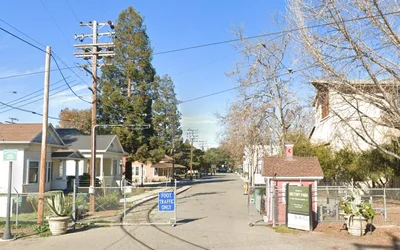
On September 19, 2026, History Park in San Jose will come alive with the sound of lion drums and the laughter of children as the community gathers for the Double Happiness Celebration, a free afternoon marking two milestones that weave together one of the city's most painful chapters and its long road toward reckoning.
The event, running from noon to 3:30 p.m. at 635 Phelan Avenue, commemorates the fifth anniversary of San Jose's formal apology to Chinese immigrants and their descendants, and the 35th anniversary of the Chinese American Historical Museum, housed inside the park's replica Ng Shing Gung building. The day's lineup includes lion dancing, cultural entertainment, children's activities, CHCP's new traveling exhibit, light refreshments, and the museum's new Apology Exhibit, according to the Chinese Historical and Cultural Project's event listing.
The Chinese American Historical Museum will be open throughout the celebration, debuting a new exhibit highlighting the city's historic apology alongside the premiere of a traveling exhibit from the Chinese Historical and Cultural Project, which is hosting the event. Light refreshments will be served, and the festivities will take place around Lillian Gong-Guy Plaza inside the park.
The anniversary being honored traces back to September 2021, when the San Jose City Council unanimously passed a resolution apologizing to Chinese immigrants and their descendants. At the time, San Jose became the largest U.S. city to formally apologize for state-sanctioned anti-Chinese discrimination and violence, following a similar apology by Antioch in May of that year. The resolution specifically acknowledged systemic racism and the city's role in the destruction of the community's early Chinatowns, coming amid a surge of attacks against Asian and Asian American communities during the COVID-19 pandemic.
That history centers on May 4, 1887, when a suspicious arson fire destroyed San Jose's Second Market Street Chinatown, displacing roughly 1,400 Chinese residents just after the city council had unanimously declared the neighborhood a public nuisance to make way for a new City Hall. The site of that burned Chinatown was near the present Fairmont Hotel, according to KQED. It was one of five distinct Chinatowns the city hosted between 1866 and 1931, including the First Market Street Chinatown, Vine Street Chinatown, the Second Market Street Chinatown, the Woolen Mills Chinatown, and finally Heinlenville, as detailed in a KQED report on the era.
Heinlenville came into being because German-American rancher John Heinlen, who had himself faced discrimination in Ohio, braved local death threats to lease his own property at Sixth and Jackson Streets to displaced residents after the 1887 fire, according to the Chinese Historical and Cultural Project. It became the city's final and longest-lasting Chinatown, operating until 1931, when it fell into bankruptcy during the Great Depression. The original Ng Shing Gung, or Temple of Five Gods, was built in Heinlenville in 1888 as a sanctuary, community hall, and Chinese language school, with construction financed by public subscription of about $2,000. The two-story brick building served the community in multiple roles: the first floor was a classroom for calligraphy and Chinese classics, a hall for town meetings, and a hostel for travelers; the second floor housed a temple with elaborately hand-carved and gilded altars made in Canton City, featuring five statues—Choi Sun, God of Wealth; Kwan Gung, God of War and Justice; Kwan Yin, Goddess of Mercy; Tien Ho, Queen of Heaven; and the Canton City God.
When Heinlenville fell into bankruptcy, the property came into the hands of the City of San Jose, which razed the area but spared the Ng Shing Gung. Community members managed to save its hand-carved, gold-gilded 1888 altar, which now sits in the History Park museum replica.
That preservation effort took organized form in 1987, when community leaders Gerrye Wong and the late Lillian Gong-Guy co-founded the Chinese Historical and Cultural Project. The CHCP went on to raise the funds to construct the replica Ng Shing Gung building at History Park, donating it to the City of San Jose in 1991—a milestone that the museum's lower-floor exhibits and upper-floor altar display still commemorate 35 years later. The replica building now houses the Chinese American Historical Museum, a joint project of History San José and the CHCP, where the first floor explores the experiences of Chinese Americans in Santa Clara Valley from the mid-19th century through today, and the second floor showcases the original altar.
The Double Happiness Celebration comes at a time when the city is also drawing attention to the broader story of Santa Clara County's changing demographics and the resilience of its Chinese American community. With lion dancing, cultural entertainment, and the newly unveiled apology exhibit, the celebration offers both a reckoning with the past and a joyful affirmation of the present. As the Chinese Historical and Cultural Project notes, the event is free and open to the public; those planning to attend are encouraged to RSVP to help plan for refreshments.
The Double Happiness Celebration is more than a pair of anniversaries—it is a bridge between a tragic history of arson, displacement, and discrimination, and a living community that has preserved its heritage, rebuilt its sacred spaces, and earned an official apology more than a century in the making.