


The building that houses the Frisco Native American Museum & Natural History Center has been many things since its oldest section went up around 1880 — a general store and gathering place, a post office, a shell shop. For the last four decades it has been something else entirely: a small, densely packed keeper of Native American heritage at the far end of Hatteras Island, in a village where N.C. Highway 12 narrows and the Atlantic makes itself heard. On Halloween weekend 2026, it will also be a place to hear ghost stories.
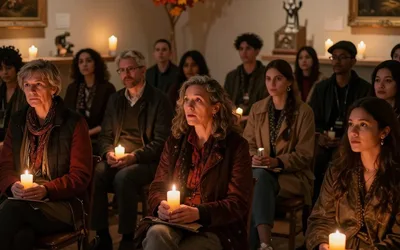
Master Storyteller Crowfeather, a longtime friend of the museum and a familiar face to anyone who has attended its powwows, will perform two sessions a day on Saturday, October 31 and Sunday, November 1 — a morning session at 10:30 a.m. and an afternoon session at 2 p.m. The program is free with museum admission, and while RSVP is not required, the museum encourages it so staff can hold a seat. The tales are drawn from nations far from the Outer Banks: an eerie ghost story from the Hitchiti people of western Georgia, tales of a giant from the Seneca of New York, and an Abenaki legend of a water monster. The museum's own announcement promises the lights will stay on.
The setting suits the season. As the museum puts it, late October and early November are when there is a chill in the air and the ocean takes on an ever so slightly menacing feeling as the waves turn choppy — the perfect time, in its telling, for spooky stories.
The occasion is the museum's 40th anniversary. The institution opened in 1987 as a nonprofit educational foundation, the culmination of a collecting habit that began when founder Carl Bornfriend was a boy. Bornfriend, an educator, had grown up watching beautiful Native objects treated carelessly or destroyed, and though his own resources were limited he made sacrifices to become what the museum calls a keeper of the heritage. When he moved to Hatteras Island he met Joyce, a fellow educator and preservationist; they married in 1986 and brought more than half a century of combined teaching experience to the project.
For the first four years, both continued teaching full time. The museum opened Friday through Sunday during the school year and seven days a week in the summer, its exhibits built in spare minutes in the oldest part of the building. Land for the nature trail was acquired in 1989, and a year later, when Carl's health no longer allowed him to teach full time, the museum began opening six days a week, year round. The low ceilings and small rooms of the old store were gradually transformed into galleries, with additions over the years expanding both headroom and display space.
That history is part of why the anniversary programming has leaned on storytelling rather than ceremony. Earlier in the year the museum marked its 40th with a new Story Walk on its free nature trail — a quarter-mile loop through maritime forest where visitors read the Lakota story of how Porcupine got his quills, adapted by museum staff and illustrated by staff member Amber Roth. The trail is open during daylight hours and is free even when the indoor exhibits are closed. The museum's 2026 calendar has also included talks on Native history and demonstrations by volunteers who have served as head dancers at powwows.
Crowfeather fits that pattern. The museum describes her as dynamic and engaging, a treat for visitors of all ages at every event, and notes that anyone who has attended past powwows may already have met her. Her Halloween-weekend program is pitched at all ages — chilling rather than gory, with the lights left on — which makes it an unusual sort of Halloween outing for the Outer Banks, where October entertainment tends toward haunted trails and costume contests. Here the scares come with a provenance, each one attached to a specific people and a specific place: Georgia, New York, northern New England.
Practical details are simple. The museum sits at 53536 N.C. Highway 12 in Frisco, and the storytelling is included with the price of admission. Sessions run 10:30 a.m. to 2 p.m. on both days, with the morning program starting at 10:30 and the afternoon program at 2. Visitors planning to come are asked to RSVP through the museum's Events & Programs page, though walk-ins are welcome. For a museum that began as one teacher's boyhood collection and grew, room by room, into a landmark at the end of the island, a weekend of ghost stories is a fitting way to close out forty years — and a reminder that the oldest kind of exhibit here has always been a voice.