


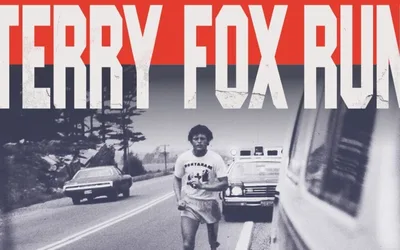
The morning of Sunday, September 20th, the Wolfville Lions Community Hall on Elm Avenue will fill with the quiet, familiar hum of a community ritual that has played out across Canada for nearly half a century. Registration begins at 9:30 a.m.; by ten, runners, walkers, cyclists, and rollerbladers will stream out along two routes, one hugging the old railbed of the Harvest Moon Trailway toward Grand Pré, the other cruising the paved Main Street sidewalks out to Greenwich. Dogs, the organizers remind everyone, must stay leashed. The gathering at 36 Elm Avenue is not a race, not a competition—there are no winners, no timing chips, no medals. It is the Terry Fox Run, and in its latest annual edition, Wolfville is again part of the largest one-day fundraiser for cancer research on Earth.
The scene in Wolfville is one of more than six hundred such gatherings across Canada this year, part of a nationwide effort that has, over more than four decades, raised close to one billion dollars in Terry Fox's name. On this same September Sunday, participants across the country will walk, run, blade, skate, or wheel. In the Annapolis Valley alone, Wolfville is one of seven run sites, joined by Windsor, Hantsport, Berwick, Kingston/Greenwood, Bridgetown, and Annapolis Royal. That quiet, unglamorous spread—a network of Lions halls, church basements, and schoolyards from sea to sea to sea—was exactly what Terry Fox imagined when he dipped his artificial leg into the Atlantic at St. John's, Newfoundland, on April 12, 1980, and began running.
He was twenty-one years old, a Simon Fraser University student and distance runner from Port Coquitlam, British Columbia, who had lost his right leg to osteosarcoma three years earlier. He had watched other cancer patients suffer and die, and he decided that one man, running on one leg, could do something about it. Calling it the Marathon of Hope, he aimed to run a marathon distance every day, a little over forty-two kilometres, from the Atlantic to the Pacific. He made it 5,373 kilometres—through Newfoundland, Nova Scotia, New Brunswick, Quebec, Ontario—before the cancer returned to his lungs and forced him to stop near Thunder Bay in September 1980. He died on June 28, 1981, at the age of twenty-two, just weeks before the first Terry Fox Run was held in his honour. He had raised modestly during the run itself, but he had awakened a country. The first Terry Fox Run in September 1981 drew an estimated 300,000 Canadians, and the movement has never stopped growing.
Wolfville's own run is a study in that same stubborn continuity. Organizer Richard Collicutt, an active Lions club volunteer, shepherded the event back to town a few years ago after an absence of several seasons. Last year, roughly one hundred dedicated participants turned out and raised a record amount for Canadian cancer research, a small but resonant echo of the national total. The run is free—there is no registration fee, no fundraising minimum—and the gates are open to anyone who wants to take part, latecomers welcome until the centre closes at 1 p.m. That open-gate philosophy is deeply baked into the Terry Fox Run's DNA: it was designed to be a non-competitive, accessible, family-friendly event, and in Wolfville that spirit takes physical shape in the two routes laid out for the morning.
The primary course travels east along the Harvest Moon Trailway toward Grand Pré National Historic Site, a 5-kilometre stretch broken into measured segments of one, two, two and a half, three, four, and five kilometres, so that anyone—a child on a first long walk, a senior pacing herself, a determined runner—can set their own distance without ever being left behind. The trail is itself a piece of living history: a 110-kilometre former railbed running from Annapolis Royal to the Grand Pré UNESCO World Heritage Site, threading through apple orchards, farm fields, and wineries, following the old Dominion Atlantic Railway line that once carried the Valley's fruit to market. Its surface is smooth and almost flat, and the grade is so gentle it barely counts as a hill. On a late-September morning, with the Minas Basin glittering to the north and the North Mountain rising beyond, it is one of the most beautiful easy paths in Atlantic Canada.
The trail ends, appropriately enough, at a place of remembrance. Grand Pré—French for "great meadow"—was a centre of Acadian settlement from the 1680s, a landscape of dykelands reclaimed from the tides by generations of farmers. In 1755, the British began the Deportation of the Acadians from that very shore, scattering families to the winds of the Atlantic world in an event still known as le Grand Dérangement. The memorial church, the statue of Longfellow's fictional Evangeline, the Deportation cross—all stand there now, within the UNESCO-designated Landscape of Grand Pré, a place Canadians visit to remember that the land itself holds sorrow and endurance. That a cancer-research fundraiser should terminate at a site of historical grief is, perhaps, not accidental. Terry Fox's marathon was itself an act of endurance against a kind of displacement—the way disease uproots a life and scatters a family's plans. Running toward Grand Pré, through the dykelands and orchards, feels like moving through a landscape that knows something about holding on.
The second Wolfville route offers its own kind of welcome. West along the Main Street sidewalk to Greenwich is a paved, easy course that organizers note is well suited to rollerbladers, very young cyclists, and families pushing small-wheeled strollers with infants. It is a route for the very people who might feel daunted by a trail run—the toddler in a stroller, the kid on training wheels, the parent who wants to walk at a toddler's pace and not a runner's. The Terry Fox Run has always insisted that everyone belongs, that a one-kilometre stroll is as meaningful as a five-kilometre run, and the Greenwich route makes that promise literal. With the Lions Hall as the hub, where registration begins at 9:30 and the doors stay open until one, the morning unfolds at a human pace. Coffee, conversation, the scratch of marker pens on name tags, and then the gentle dispersal of a hundred people along two quiet roads, leashed dogs trotting beside strollers, cyclists ringing bells, rollers gliding over pavement.
There is a particular poignancy to running for Terry Fox in a small town. In the big-city runs, the crowds can make the cause feel abstract; in Wolfville, a hundred participants is a real neighbourhood out on the trail, recognizable faces passing under apple trees. The record fundraising of last year's small group speaks to how deeply the Valley has taken the cause to heart. And though Terry Fox has been gone for forty-five years, his name still opens wallets and moves feet on a Sunday morning in September. His friend and trainer, Doug Alward, once said that Terry never really believed he would finish the run across Canada; he believed he would start it, and that other people would finish it. That is precisely what has happened, years on, on a former railbed in Nova Scotia, where the Marathon of Hope continues not in one man's footsteps but in the small, determined steps of a community, one kilometre at a time, past the orchards and the dykelands, toward a meadow that remembers everything and a future that keeps getting brighter.