


On Aug. 27 at 7 p.m., a few weeks after a broken chilled water line shuttered Vilas Hall and forced the cancellation of the summer season, the Cinematheque's folding chairs will once again creak to life. From Aug. 27 through Dec. 13, most Thursdays through Saturdays, room 4070 of Vilas Hall becomes Madison's private movie palace: a place where a 1932 early-sound melodrama can sit on the same calendar as a 3D-game-engine animation, where a Mel Brooks double feature honors the centenary of his birth, and where the films of S.S. Rajamouli receive their own tribute. Admission is free, seating is limited, and the program is so crowded that the Cinematheque is, in effect, squeezing in twelve of the fourteen screenings that the June water line disaster forced it to cancel over the summer. Katsuhito Ishii's lovingly eccentric The Taste of Tea (2004) will finally light up a Madison screen on Oct. 23, months after its originally scheduled date. Mel Brooks, born in 1926, gets a double feature of The Producers and The Twelve Chairs on Sept. 19. And if you ask senior programmer Mike King which single screening he would crown, he points to Nov. 7, when the Cinematheque unspools a 35mm print of Harry Elfont and Deborah Kaplan's Josie and the Pussycats (2001) to mark the film's 25th anniversary. King has been a devotee since the beginning, having watched the film more than ten times since its initial release. "Its sugar-rush satire of product placement seems to finally be building up a bit of a fanbase," he wrote by email, "so it's nice that people are catching on and I'm no longer in a cult of one."
That Josie and the Pussycats can now headline a university's fall calendar is, in a way, the whole story of the Cinematheque, which has long defined itself as a home to all decades of the medium. With limited seating, every showing is free and open to the public.
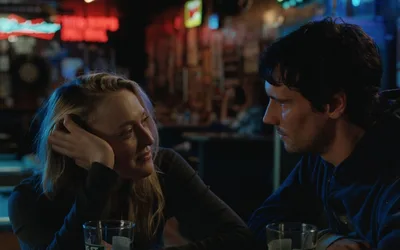
The fall season is built on several overlapping series, each with its own temperament. The Thursday premiere series, which the Cinematheque started in 2022, opens with Chicago's Joe Swanberg, the mumblecore director, back in town with The Sun Never Sets (2026), starring Dakota Fanning. For the next twelve consecutive Thursdays, the slot belongs to unorthodox new fare: The Misconceived, an uncanny animated film assembled in a 3D game engine, lands on Sept. 17; Fjord, a Romanian-Norwegian family drama that took the Palme d'Or at Cannes in 2026, debuts Oct. 15; Soul Patrol, a documentary about the first Black special operations unit of the Vietnam War, screens Oct. 29 with director J.M. Harper in conversation with journalist Jesse Lewis; and the series concludes Nov. 19 with Chronovisor, a scholarly mystery that borrows and subverts the language of science fiction and horror over a lavish orchestral score.
On the other end of the spectrum, the once-a-month Sunday afternoon series moves to the Chazen Museum and puts the spotlight on Zeitgeist Films, the Manhattan distributor that has been releasing international art-house movies for decades. Distribution, King argues, is one of the most unsung forces in shaping film culture, and giving a showcase to a company like Zeitgeist "that has done decades of essential work is a natural." The Chazen series includes Todd Haynes's queer experimental anthology Poison and Guy Maddin's German Expressionism-inspired Careful, with its completely unreal color scheme.
Then there is the Rajamouli series, titled "Rajamouli: Myth, Spectacle, Cinema," which the Cinematheque has booked with evident ambition. It brings a selection of the Telugu-language filmmaker's spectacular stories to the audience, and the series is framed not as a curiosity but as a test run: whether it is well received here will help determine the future of this branch of Indian movies at the Cinematheque.
The season closes with a visit from another kind of auteur, Casper Kelly, who will be in Madison to introduce a series of films he has picked, a guest-curator the Cinematheque has embraced. The series, titled "Casper Kelly Presents!" is the kind of cross-pollination the Cinematheque does best: a new voice sharing the screen with films he loves, all for nothing but the price of a seat.
A season this wide is the point. From an early-sound melodrama by Clarence Brown to the offerings of a cable-television auteur, the Madison Cinematheque has always understood itself as a home to every decade of the medium at once. When the water line burst in June, the program stalled but did not break. It simply moved dates, doubled up some features, and carried on, reminding the city that a night at the movies in Madison has never meant only one thing. All screenings are free and open to the public, with limited seating. For times, the curious can turn to cinema.wisc.edu. The chairs will be full, as they have been for years, and somewhere in the dark a projector will flicker, insisting that a film is best seen in a room full of strangers.