


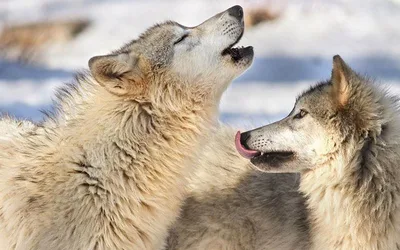
The wolves know the schedule better than most of the humans who come to see them. Twice a week, at precisely 1:30 in the afternoon, the gray wolves of the Bay Beach Wildlife Sanctuary in Green Bay, Wisconsin, gather near the fence line of their wooded enclosure, waiting for the familiar sound of staff approaching with their meal. For visitors who happen to be standing in front of the wolf exhibit by the Woodland Building, it is the moment the sanctuary's most charismatic residents step into the spotlight — a free program that has become one of the most reliably delightful rituals at this nearly century-old institution.
The Wolf Feeding program, which runs every Tuesday and Friday at 1:30 p.m., is exactly what it sounds like: sanctuary staff deliver the wolves' afternoon meal while visitors watch from inside or outside the Woodland Building's wolf viewing area. The animals have called this one-acre habitat home for more than a decade, and the program is free, drawing visitors from the adjacent Bay Beach Amusement Park.
The wolves at the center of this ritual are Ember, Luna, and Yoon — a trio that has been together for thirteen years.
Over the years, the pack has seen its share of change, but the remaining wolves — Ember, Luna, and Yoon — have continued to thrive, and in 2026 the sanctuary marked their thirteen years together with a special Wolf Program on June 26, complete with staff interactions, giveaways, and a celebration of the pack's history.
The wolf exhibit itself is a relatively recent addition to a sanctuary with a much longer story. The Bay Beach Wildlife Sanctuary traces its origins to 1929, when the City of Green Bay purchased 250 acres adjacent to the Bay Beach Amusement Park with the intention of building a golf course. That plan never materialized. Instead, in 1935, a group of concerned citizens led by Chester Cole and Lyle Kingston developed the concept of a wildlife refuge — with guidance from none other than Aldo Leopold, the pioneering conservationist and author of "A Sand County Almanac" whose land ethic would reshape American environmental thought. The sanctuary was incorporated in 1936, offering fifty-cent memberships to raise funds, and the first pond was hand-dug and stocked with injured waterfowl. The effort won a national award the following year.
What followed was a remarkable transformation. Between 1938 and 1941, with heavy equipment donated by Shuster's Construction and the county, the National Youth Administration and Work Project Administration put 100 men to work for two years digging the sanctuary's present lagoon system of 55 acres, landscaping the islands, and planting trees and shrubs. In 1938, Louis Barkhausen donated six Canada geese — the ancestors of the sanctuary's present goose flock. By 1956, more than 3,000 ducks and geese were wintering at the refuge, supported by corn sales at ten cents a bag and concession revenue. The sanctuary's goose banding program, begun in 1965, remains one of the longest-running in the state.
The sanctuary's modern era began in the 1970s, when the city hired its first college-trained professional sanctuary manager and the Friends of the Wildlife Sanctuary, a non-profit support group, was incorporated in 1978. The Nature Education Center opened in 1985, built entirely with $1.7 million in private funds raised by the Friends. But it was in 1994 that the wolves found their home: the Woodland Building, a 6,000-square-foot facility funded by the Friends, was constructed to house native Wisconsin woodland animals, complete with a one-acre wolf habitat. The building was completed in 1996, and the wolf exhibit has been a centerpiece of the sanctuary ever since.
Today, the sanctuary along the shores of Green Bay offers visitors a chance to see everything from bald eagles and river otters to white-tailed deer and, of course, the wolves. It is a place where the mission has remained remarkably consistent over nine decades, as the sanctuary marked its 90th anniversary in 2026.
That mission is on full display every Tuesday and Friday afternoon at the wolf feeding. Visitors gather in front of the wolf exhibit, children pressed against the fence, adults with cameras ready, as staff approach with the meal. The wolves, who have been cared for by the same animal care team since they were pups, respond with the mix of anticipation and restraint that comes from years of routine.
The sanctuary also offers a range of other programs throughout the year — nature walks, storytime for young children, summer camps, and special events. But there is something uniquely compelling about the wolf feeding. It is a moment when the wild and the domestic meet, when a pack of animals that once roamed freely across the North American landscape settles in for a meal in a carefully designed habitat on the shores of Green Bay, watched by a crowd of humans who have come to learn, to wonder, and to connect with a species that has haunted the human imagination for millennia.
The wolves of Bay Beach Wildlife Sanctuary have been howling for thirteen years now, and the sanctuary itself has been nurturing that connection between people and nature for ninety. On a warm September afternoon, with the sun filtering through the trees and the wolves waiting by the fence, it is easy to see why this simple program — a feeding, a moment of shared wonder — has become such a beloved part of Green Bay's civic life. It is, in the truest sense, a howl in the afternoon: a reminder that even in the middle of a city, the wild is never very far away.