


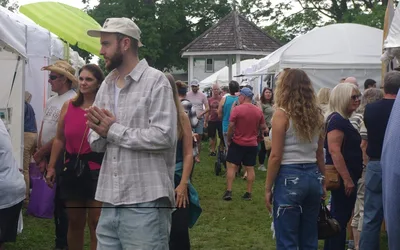
For four days every September, the fields along County Road M between Janesville and Edgerton, Wisconsin, come alive with the hiss of steam, the ring of hammers on iron, and the sweet ache of freshly cut lumber, as the Rock River Thresheree gathers steam enthusiasts from across the Midwest for a living-history celebration of rural life. In 2026, the seventy-year-old festival returns to Thresherman's Park from September 4 through 7, marking its seventieth annual reunion by playing host to the national summer show of the Minneapolis Moline Collectors Club, with the hundredth anniversary of Caterpillar and Fuller & Johnson gas engines also taking center stage among the many working antiques that fill the grounds.
The word "thresheree" itself is a bit of local folk grammar, a term for a festival celebrating the history of grain farming, coined from "thresher," the machine that separates grain from chaff and straw. Before steam and horse power revolutionized the work in the 1830s, threshing was slow, grueling hand labor. The men who built Edgerton's thresheree were determined that this once-essential part of American life, and the machines that made it possible, would not be forgotten.
The story of the festival begins with a young man named John Horton, who bought his first steam engine when he was sixteen and, from that day on, always kept one or two around. Around 1955 he acquired an Advance Rumely from a rural Stoughton threshing ring, a machine that had sat idle since the last man able to run it had passed away. Horton's neighbor, August Hantke, spoke the words that would set the whole thing in motion: "Before I die, I'd like to see threshing done the old way." Horton, his son Jack, and Hantke set about repairing the engine, and on the afternoon of Friday, July 27, 1956, they fired it up and invited the public, along with local television and newsreel cameras, to watch an old-fashioned threshing. About a hundred spectators showed up, including reporters from the Edgerton Reporter, the Janesville Gazette, and the Wisconsin State Journal, and the wonder of that afternoon never really ended.
Among those present was a five-year-old named Jim Raymond, who would grow up to become one of the event's most devoted volunteers. He remembered walking a wheat field with his father while a binder and a team of horses did the cutting. "By that time, people were all driving tractors, and it was an odd thing to see somebody who was out working with horses, so it was seared into my mind," Raymond recalled nearly seventy years later. "I thought 'wow this is really cool'—even as a young kid." That early fascination endured, and Raymond now marvels at the skill of the men and women who keep the old iron alive. "When I first joined this thing, I thought it was going to be a bunch of old farmers," he said. "Come to find out, they're not a bunch of old-timers; they're a bunch of machinists. They can build anything! There is nothing that intimidates them."
In its first full years, the show operated primarily as a fundraiser for the local Fulton Church, but the public's appetite for it proved too big to contain. In 1960 the church handed the event over to a group of dedicated steam enthusiasts, the show moved to American Legion Park in Edgerton, and the club reorganized as Rock River Thresheree, Inc., holding its first election of officers. A year later came the first land purchase, part of the present-day Thresherman's Park, and in 1965 the organization received its nonprofit status. Today the entire affair, which draws roughly sixteen thousand visitors each year, is run by an all-volunteer membership on land the group owns, with every penny of proceeds going back into improving the park.
The grounds themselves are a working museum of American farm and industrial history. A restored steam-powered sawmill transforms logs into boards from ten in the morning until three in the afternoon, while a gristmill, sorghum mill, and shingle mill keep the air rich with the scents and sounds of production. There is a threshing demonstration, corn shelling, and potato digging, plus blacksmiths, wheelwrights, and woodcarvers at their benches. A steam-powered pile driver pounds away on the hour, plowing crews turn the earth, and a car show brings restored antique cars and trucks alongside displays of classic construction equipment, a steam calliope, and a military encampment. Those who want a hands-on thrill can climb into the seat of a real farm tractor and drive it themselves, and collectors browse a flea market that draws more than three hundred vendors, while a restored 1950s-era Sears kit house offers an unexpected glimpse into postwar domestic life.
One of the festival's most beloved institutions is the Rock River Cannonball, a small steam train that circles the park on a roughly mile-and-a-half track. Its story is a testament to the group's can-do spirit. According to Jim Raymond, Walter Durst of the Durst Corporation in Beloit believed in the event enough to help purchase land and later fund the train, reasoning that the festival needed something extra to draw the crowds. "They found a train in Germany. They tied it to the deck of a freighter and shipped it to Milwaukee," Raymond said. "Three guys from the thresheree went and picked it up in Milwaukee and brought it back here. The first year, they set it on just some rails, and it went 50 feet in one direction, and 50 feet back." The following year, the volunteers built out the track, and the Cannonball has been chugging around the park ever since. Historical reenactors even stage a train robbery each day, adding a touch of drama to the nostalgia.
At the center of each afternoon is the daily Parade of Power, which rolls through the grounds at two o'clock sharp. It is the festival's heartbeat: a procession of steam traction engines, gas tractors, and antique equipment parading past the crowds in a rolling display of mechanical might. It is a moment that connects the festival to the communal rhythms of the harvest era, when threshing crews of twenty men or more would move from farm to farm, helping neighbors bring in the crop. "In order for it to work, the community had to come together," Raymond reflected. "Farmers couldn't afford to have their own threshing machine, but they needed to be mechanized. You needed to have a steam engine, and this equipment is a big part of our history."
For the 2026 edition, that community spirit extends to the wider world of collectors, as the thresheree welcomes the Minneapolis Moline Collectors Club's national summer show to Edgerton alongside the Caterpillar and Fuller & Johnson feature. The event runs from eight in the morning to five each evening, with admission set at ten dollars a person and children twelve and under free. On Friday, seniors, first responders, and veterans get in for eight dollars, and the volunteer corps that has sustained this gathering for seventy years will be there once again, ready to show visitors just how much life remains in the old ways.